City Developments Limited (CDL) has successfully secured high-quality carbon credits for offsetting greenhouse gas emissions from its operations, through the pilot auction of Climate Impact X (CIX). CIX is a global carbon credit exchange and marketplace jointly established by DBS Bank, Singapore Exchange, Standard Chartered and Temasek. The carbon credits are from a curated portfolio of eight Natural Climate Solutions (NCS) projects and will be retired over the next three years to offset an estimated 6-7% of emissions from CDL’s operations per year1 to complement its net zero targets by 2030.
The inaugural carbon auction, which took place in October, was oversubscribed, demonstrating strong business interest in managing corporate carbon emissions. CDL was the only Singapore real estate company invited amongst 19 pioneering companies. Through participating in this auction, CDL supports CIX’s vision of providing solutions for corporates to be accountable for their carbon emissions and scaling the voluntary carbon market of high-performance projects globally.
In addition, NCS’ projects help to protect and restore natural ecosystems and offer a wide range of benefits such as generating income for local communities, supporting biodiversity and supporting UN Sustainable Development Goals outcomes, which are in line with CDL’s sustainability vision and values.
CDL Chief Sustainability Officer Ms Esther An said, “With a long-standing commitment to a low carbon economy, green buildings and decarbonisation have been CDL’s top business priorities. We have voluntarily neutralised the annual carbon emissions for our corporate office operations since 2009 and became the first property conglomerate in Southeast Asia to sign the World Green Building Council’s Net Zero Carbon Buildings Commitment this February. CDL is proud to be amongst the pioneering adopters of the inaugural CIX Pilot Auction. Its unique selection of high-quality NCS offset projects will help us further expand our carbon reduction efforts in the race to zero.”
CDL is the first real estate developer in Singapore and the first real estate conglomerate in Southeast Asia to sign the World Green Building Council’s Net Zero Carbon Buildings Commitment in February this year, pledging to achieve net zero operational carbon by 2030. This commitment covers all its new and existing wholly-owned assets and developments under its direct operational and management control.
In its decarbonisation journey, CDL has also set other prudent pathways to raise energy efficiency, including participating in the emerging Renewable Energy Certificates (RECs) marketplace since 2017. In 2018, the company was the first Singapore developer to purchase RECs using SP Group’s blockchain-enabled platform. By procuring locally-sourced RECs, CDL attributed 100% of the electricity consumed by its headquarters’ operations and part of its commercial buildings’ operations in 2020 to renewable sources. This offset 1,184 tonnes of carbon emissions in 2020, equivalent to the emissions from powering around 611 typical four-room HDB flats for one year.
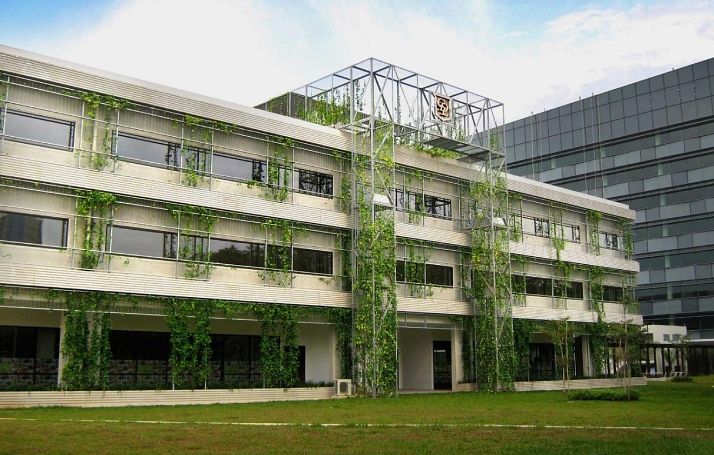
Since 2009, CDL has carbon neutralised its corporate headquarters operations, and one of its commercial properties, Tampines Concourse, through purchasing carbon credits. Recognised as the first Carbon Neutral development in Asia Pacific, Tampines Concourse was designed and constructed with environmental sustainability in mind. This includes the use of “green concrete”, as well as an innovative, indoor non-compressor fresh air-cooling system for smart temperature and humidity control. Together, these features result in energy savings of over 620,000 kWh per year, lowering the building’s carbon footprint. CDL reduced carbon emissions to net zero by offsetting some 6,750 tonnes of carbon dioxide equivalent (tCO2-e) for 2009, and has been measuring and offsetting the building’s carbon emissions on an annual basis since then.
1 Based off CDL’s total carbon emissions (tonnes CO2e) from CDL’s operations in Singapore in 2019, which includes Scope 1, Scope 2 and Scope 3 emissions. 2019 data was used as CDL’s operations were impacted by COVID-19 in 2020.
