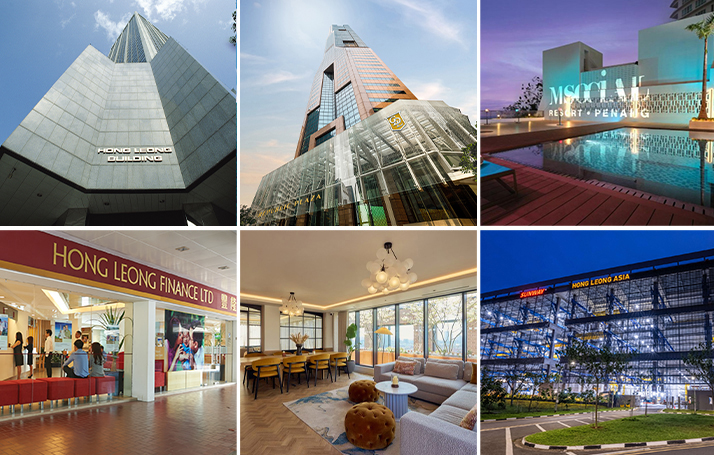
 From real estate to hospitality, finance to industrials, Hong Leong Group has grown alongside Singapore’s economy over the years. Chairman Kwek credits its strength to the Group’s ability to lead, reinvent, and building a future worthy of its legacy.
Tracing
Singapore’s
History Through
The Eyes Of
A Homegrown
Giant
As Singapore turns 60, Hong Leong Group stands as a mirror of the nation’s development.
“Our true strength lies in our ability to reinvent and lead with purpose,” said Hong Leong Group Executive Chairman Mr Kwek Leng Beng.
Hong Leong Group started its journey as a small general trading firm in 1941. Over the past six decades, it has grown in parallel with Singapore, transforming into a household name and one of the largest conglomerates in Southeast Asia with a diversified portfolio. Real estate, hospitality, finance and industrials are key sectors where it makes its mark.
Amid fast-paced economic transformation, Hong Leong’s diversified companies are investing in their Singaporean core, even as they compete on the world stage. This article is adapted from Singapore’s business daily, The Business Times, first published on 6 August 2025.
“Much like Singapore, Hong Leong Group stands as a testament to what vision, resilience, and innovation can achieve over time. We are firmly committed to building a future worthy of our past,” Hong Leong Group executive chairman Mr Kwek Leng Beng tells The Business Times, pointing to a legacy and record “shaped by performance, adaptability, and trust”.
Pioneering success
The Singapore River has undergone a massive evolution since independence, with shophouses and godowns making room for scores of modern skyscrapers. The 1970s and 80s saw a frenzy of private sector building construction in the area, according to the National Library Board publication BiblioAsia. One example the article cited is Hong Leong Holdings’ redevelopment of 28 shophouses in the Raffles Quay area into a new office tower.
Today, Hong Leong Building is a landmark in the central business district (CBD), and among the flagship projects in property developer Hong Leong Holdings’ (HLH) commercial stable, while its sister company City Developments Limited (CDL) counts nearby Republic Plaza – one of Singapore’s tallest skyscrapers – as a jewel in the crown of its Grade A office portfolio.
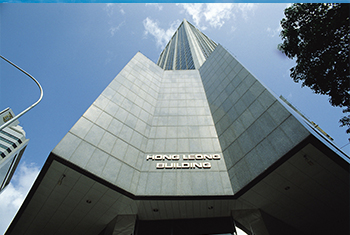 Completed in 1976, Hong Leong Building, a BCA Platinum certified green building for energy optimisation, is a landmark in the central business district (CBD), and among the flagship projects in property developer Hong Leong Holdings’ (HLH) commercial stable.
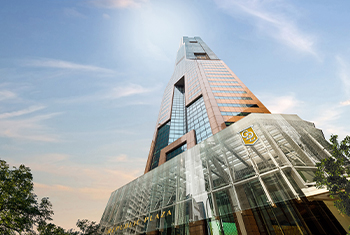 The 280-metre, 66-storey Republic Plaza, which was completed in 1996 and refurbished in 2019, has been honoured by architecture’s prestigious FIABCI Prix d’Excellence, and has also racked up accolades for sustainability and eco-friendliness.
Listed on the Singapore Exchange, CDL – a pioneering Singapore developer established in 1963 – has been part of the Hong Leong Group since 1972, after the group became its controlling shareholder. Since then, the company has developed more than 53,000 homes and owns around 23 million square feet of gross floor area in residential for lease, commercial and hospitality assets globally.
Other contributions made over the decades to Singapore’s skyline and real estate development, include sister developers Hong Realty and TID Pte Ltd.
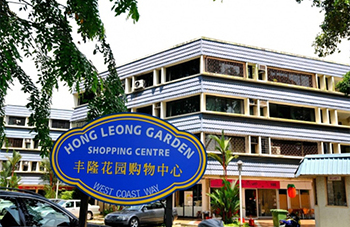 Hong Realty regularly partners with sister developers HLH, CDL and TID on numerous projects under Hong Leong Group. Among the Group’s earliest developments was the former Hong Leong Garden in 1981, comprising 72 residential apartments and 66 shops.
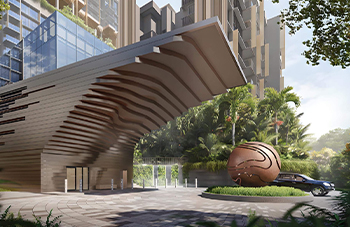 Launched in March 2024, the 267-unit Lentoria is TID’s latest residential project to date, located at the Lentor Hills estate.
Founded by the late Kwek Hong Png as a building materials trading company in 1941, the Hong Leong Group still counts the real estate industry as central to its corporate portfolio.
Incorporated in 1963, urban solutions provider Hong Leong Asia (HLA) grew in tandem with Singapore’s public housing in the post-independence years, the mainstay for HLA’s precast concrete business which specialises in the design and manufacture of prefabricated building components.
Meanwhile, ready-mix concrete supplier Island Concrete has also been integral to several major public infrastructure works since its formation in 1970. These include Changi Airport Terminal 1 in the 1970s, the first Mass Rapid Transit line in the 1980s, the iconic Marina Bay Sands in 2010, and the Marina Coastal Expressway, which opened in 2013 and is Singapore’s first highway to include an undersea road along its route.
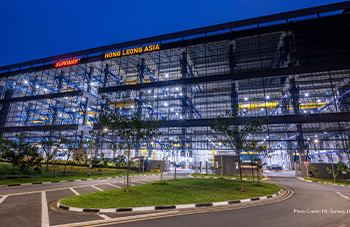 Spanning 3.8 hectares, HLA’s HL-Sunway Prefab is Singapore’s largest precast manufacturing facility that can produce up to 100,000 cubic metres of precast components per year, or enough to complete about 17 blocks of flats.
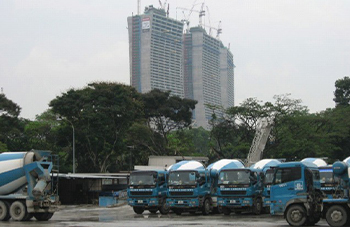 HLA subsidiary, Island Concrete supplied 1.2 million cubic metres of ready mixed concrete to construct the iconic Marina Bay Sands Integrated Resort, opened in 2010.
Giving a lift to local entrepreneurs
Hong Leong Group has provided not just the raw materials for nation building, but also the capital needed to get local entrepreneurs off the ground.
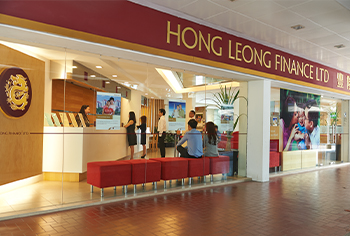
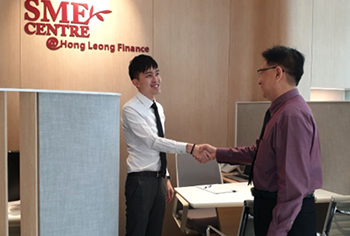
Founded in 1961, Hong Leong Finance (HLF) was listed on the Singapore bourse in 1974 and is the nation’s largest finance company. It serves individuals and small- and medium-sized enterprises (SMEs) alike, offering deposits, savings, loans, and advisory services at its 28 branches and 12 SME Centres island-wide.
SMEs make up a strategic segment of the clientele for the financial services firm, which is also the only finance company in Singapore with full sponsorship status for the Singapore Exchange’s Catalist board.
Established in 1961, HLF is Singapore’s largest finance company with 28 branches and 12 SME Centres island-wide. Its 12th SME Centre opened in 2019 at Potong Pasir to help more SME customers in the heartlands.
Representing the nation
Beyond forging local partnerships, Hong Leong Group has also cast a wide net in international waters. Significant overseas investments include HLA acquiring a stake in Malaysia’s cement producer Tasek Corporation Berhad in the 1970s.
HLA also entered powertrain solutions manufacturing and distribution in the 1990s with 48.7% stake in New York-listed China Yuchai International. This powertrain solutions business contributed almost S$3.6 billion in revenue in 2024, or more than four-fifths of HLA’s top line.
In real estate, HLH entered the mainland Chinese real estate market early in the early 1990s starting with the Beijing Riviera luxury residential project in 1993. The developer is still active in China, where its joint ventures have built mixed-use developments in major hubs such as Chengdu and Chongqing.
CDL’s China arm has likewise built a strong portfolio across key Tier 1 and Tier 2 cities, including Shanghai, Suzhou, Chongqing and Shenzhen, since its setup in 2010. The developer has also expanded its property development and asset management operations in major overseas markets, like Britain, Japan and Australia, and a sizeable living sector portfolio.
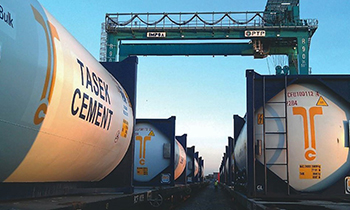 HLA entered Malaysia in the 1970s acquiring a stake in Tasek. Today, it is a wholly owned subsidiary of HLA and its main operations are in the manufacture and sale of cement and related products.
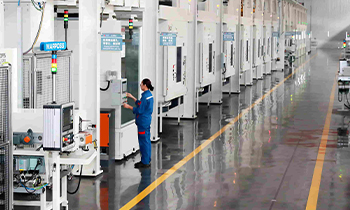 New York-listed China Yuchai is in diesel engines and powertrain solutions and contributed almost S$3.6 billion in revenue in 2024.
Still selling the Singapore brand overseas
Hong Leong Group’s international reach also comes on the back of its vibrant hospitality arm, which has helped to fly the Singapore flag in global cities like New York and London.
The group’s strategic hotel expansion took off in the 1990s, when an earlier CDL hotel unit built on its Asian footprint to begin a string of acquisitions in the West. One watershed transaction was the purchase of the Plaza Hotel in New York for S$455 million.
Those deals paved the way for the London listing of Millennium & Copthorne Hotels plc (M&C) in 1996, which made M&C the first Singapore-controlled company to trade on the London Stock Exchange. It was later privatised in 2019 as a wholly owned CDL subsidiary under the brand Millennium Hotels and Resorts (MHR).
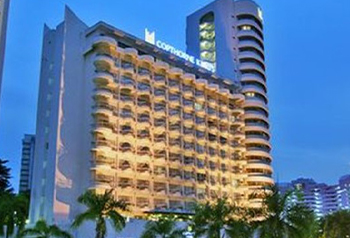 In 1970, as Singapore was finding its post-independence identity, King’s Hotel opened its doors at the Singapore River under the direction of Chairman Kwek. Today, the hotel is named Copthorne King’s Singapore and still retains its proud Singaporean heritage.
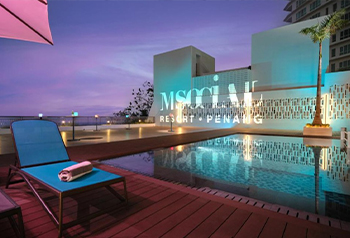 Debuted in 2016, the trendy lifestyle M Social brand attracts a new generation of tech-savvy travellers with smart tech-enabled rooms. The M Social Penang is one of them.
Some MHR hotels are owned by mainboard-listed CDL Hospitality Trusts (CDLHT), a stapled group which comprises the first hotel real estate investment trust on the Singapore Exchange and had about S$3.5 billion in assets under management as at end-March.
CDLHT has more than 4,900 hotel rooms worldwide, with its portfolio anchored by strategic locations in gateway cities. A substantial portion of its portfolio value is concentrated in central Singapore, with the upcoming Moxy Singapore Clarke Quay slated to add 475 keys to CDLHT’s presence in Singapore.
The trust also marked its foray into the living asset class in 2021 and achieved two milestones in 2024 with the opening of its build-to-rent residential project, The Castings in Manchester, and the acquisition of a purpose-built student accommodation building, Benson Yard in Liverpool.
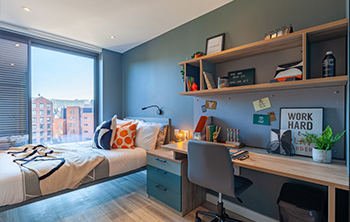 Opened in 2023, CDLHT’s Benson Yard is a 404-bed purpose-built student accommodation building in Liverpool, UK, comprising a mix of ensuites and studio units.
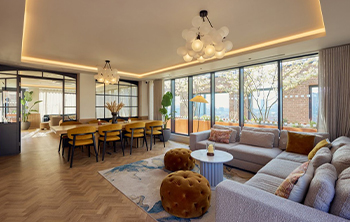 Located in Piccadilly East in Manchester, The Castings is a residential development comprising 352 apartment units, including studios, one-, two- and three-bedroom units.