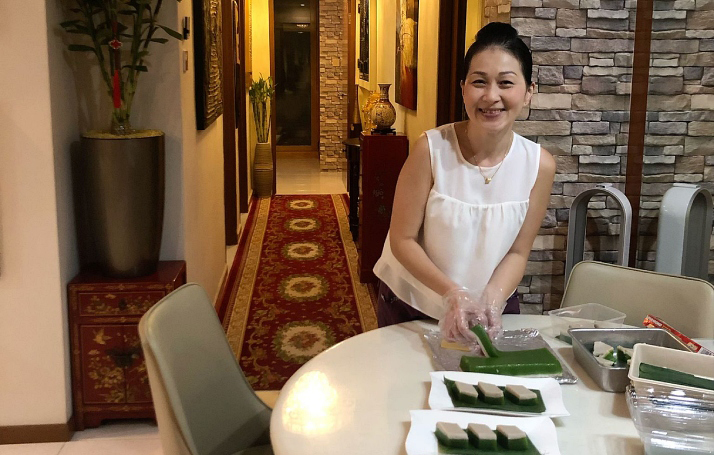
 Amelyn busy preparing kueh talam. The dessert features two layers, with the top white layer made with coconut milk, and the bottom green layer made with pandan juice.
An
‘In-kueh-dible’
Journey Into
The World
Of Kueh
Contributed by M Hotel The Buffet Restaurant Manager Ms Amelyn Ang.
Amelyn has been with M Hotel for 26 years and found herself having a little more free time during Singapore’s Phase 2 (Heightened Alert) period. She decided to try making kueh (a type of traditional snack or dessert typically made with rice or glutinous rice) and the rest is history. She shares with Hi Life about her new-found passion.
 I started my first kueh making attempt in May this year. It was during Singapore’s Phase 2 (Heightened Alert), which had tightened restrictions, such as dining in no longer being allowed. The F&B team at M Hotel was asked to clear their annual leave, and I found myself with more free time.
Hence, I decided to try making kueh! I learnt by watching YouTube videos, and my first attempt was kueh puteri salat, a kueh with sticky rice layered with coconut egg custard. It took me three tries before I finally managed to master it! During the process, I also tried exploring other recipes and tweaking it, creating my own recipe in the process. I am very particular on the texture, taste and colour, so I like to experiment with different ingredients and ratios until I am fully satisfied with the end product.
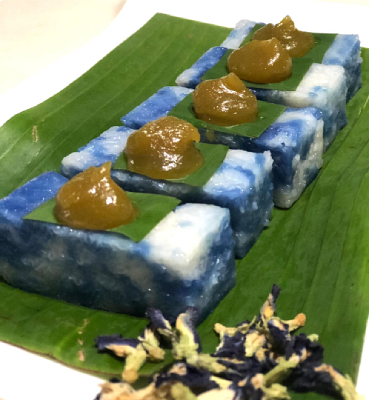 Pulut tai tai is a blue glutinous rice cake which comes with a blue tint from blue pea flowers added. It is also commonly known as kueh kaya as it is eaten with a dollop of kaya (coconut egg jam).
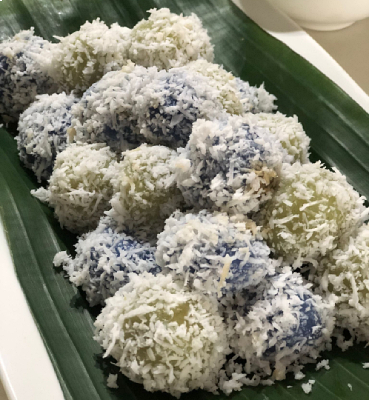 Ondeh ondeh, a boiled rice cake filled with liquid gula melaka and coated in coconut. Amelyn’s recipe has two versions, one with blue pea flower and one with pandan, that helps give the rice cake the blue and green colours.
Being in the F&B department for so long, I am influenced by the delicious food and pastries available. Sometimes, I would bring my kueh creations to work to let the chefs have a try. They also usually give me valuable feedback that helps me perfect my recipe.
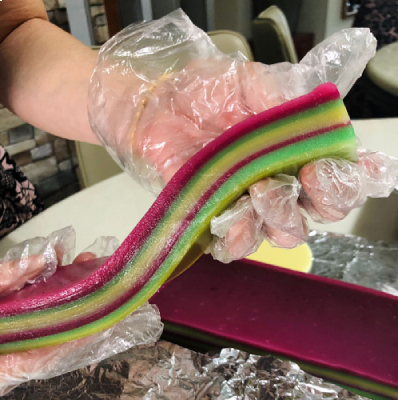
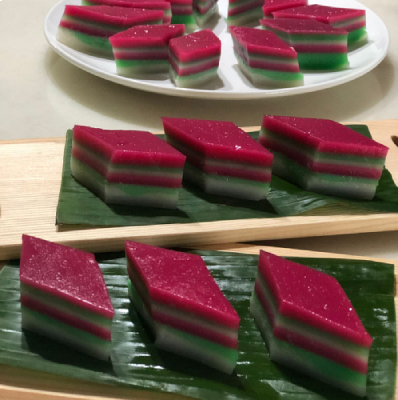
Now, I make kueh about two to three times a week, either trying out new kuehs or practising and perfecting recipes I have tried. I usually share the kueh with my family, and it motivates me to see how much they enjoy it! I once made kueh Pelangi (also commonly known as nine-layer kueh or 九层糕), my two-year old niece was so happy to see the colours and ate many pieces. It made her day, and mine too!
Amelyn’s kueh Pelangi, a colourful kueh with multiple layers.
Some ingredients are also hard to find, such as blue pea flower, that helps to add a beautiful blue hue to the kueh. My sister will lend a hand and help me to find these ingredients, and it encouraged me to continue making kueh for my family and friends.
Another kueh I’m proud of having learnt to make is ham chim peng (咸煎饼, a type of Chinese doughnut made with glutinous rice). This traditional snack is getting hard to find in Singapore, and it’s a personal accomplishment for me to know how to make it.
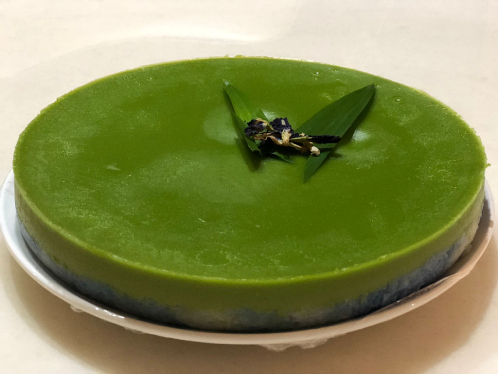 Kueh puteri salat was the first kueh that Amelyn tried making, when she found herself with more free time during Singapore’s tightened restrictions back in May. It features pressed sticky rice layered with coconut egg custard flavoured with pandan.
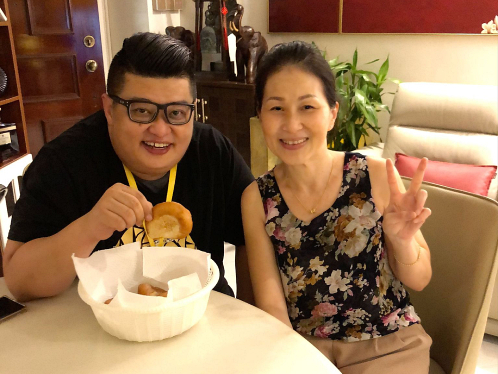 Amelyn with a friend, who got to try her ham chim peng, a traditional Chinese snack that is hard to find in Singapore today. A fried doughnut with glutinous rice, it is also known as kueh bantal in some places.
Since I’ve started my kueh-making journey, I’ve been sharing it on social media. I have received many private messages from friends and family asking me if these kueh is for sale. While I have no plans for that currently, it really boosts my confidence. For now, I will continue enjoying the process of making all the different types of kueh!