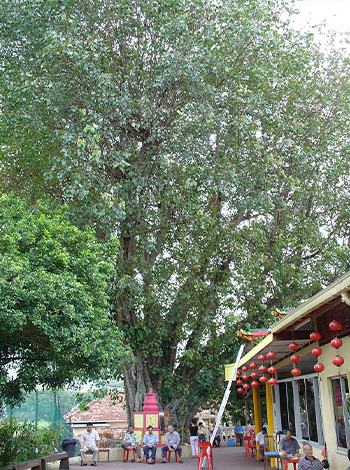
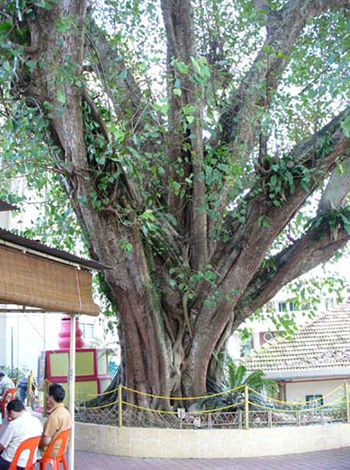
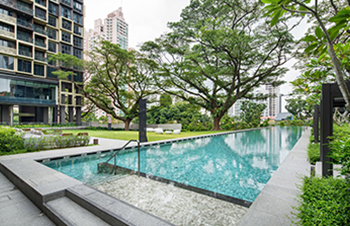
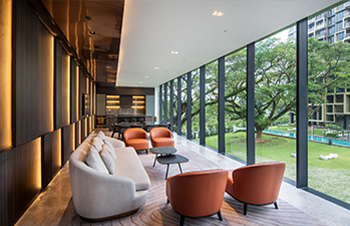
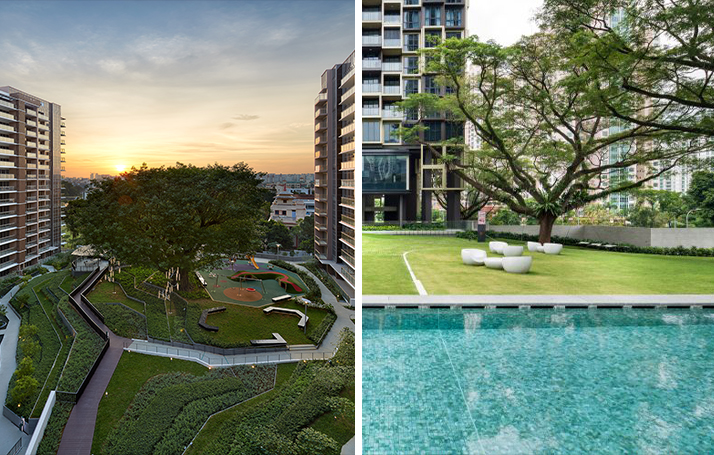
 (Left) Standing as a century-old Bodhi tree from the former Jin Long Si temple, it now anchors the heart of Bartley Residences, shaping both the landscape and the community around it. (Right) At Irwell Hill Residences, four majestic Samanea saman trees, which are over 30 years old, command the grounds with their sprawling canopies, creating a lush, tranquil oasis.
Building With
Purpose:
How Hong Leong
Group Of
Developers Shape
Modern Living
Through Nature And
Heritage
In Singapore’s ever-evolving cityscape, innovation goes beyond new architecture. At Bartley Residences and Irwell Hill Residences, Hong Leong Group’s City Developments Limited, Hong Leong Holdings Limited, and TID Pte Ltd., demonstrate how heritage elements can be more than scenic features; becoming landmarks that anchor communities, enrich the environment, and shape the character of contemporary living.
By integrating these natural and cultural treasures into their developments, Hong Leong Group proves that progress and preservation can thrive together, creating spaces that are both vibrant and enduring.
In Singapore’s rapidly evolving urban landscape, conservation extends beyond heritage buildings. Trees, the topic in this editorial piece, can also become living landmarks as silent witnesses to history that shape the character and soul of new developments.
In thoughtfully designed projects, these natural treasures are not obstacles to progress, but anchors of identity, community, and environmental vitality.
Let’s explore two projects developed by Hong Leong Group of property developers that are centred around two trees.
Bartley Residences
The story of Bartley Residences begins long before its foundations were laid. The site was formerly home to Jin Long Si Temple, a long-standing place of worship whose grounds held deep spiritual significance for many before Hong Leong Holdings Limited (HLH), City Developments Limited (CDL), and TID Pte Ltd acquired it through the Government Land Sale programme.
At the heart of the site stood a Bodhi tree, a living relic believed to be one of twelve seeds brought to Singapore by monks from Sri Lanka in the nineteenth century. Estimated to be around 140 years old as of 2026, the tree rises over 30 metres in height, with a girth of approximately 8.5 metres. Separate verifications by the Nature Society Singapore and the National Parks Board have recognised it as the most ancient and largest Bodhi tree in Singapore.
The Bodhi tree at the old Jin Long Si temple shares a symbiotic relationship with the temple as its roots are deeply intertwined with the building's foundation.
From the earliest stages of planning, preserving this remarkable tree was deemed critical to the project’s success. Rather than seeing it as an impediment, the development was intentionally designed around it. The Bodhi tree was earmarked to anchor one of the estate’s two residential clusters, shaping the masterplan in both spatial and symbolic terms.
Protecting a tree of such scale and heritage required meticulous planning. A horticulturalist was engaged to survey the extent of its root system, analyse its structural stability on the sloping terrain and monitor its health throughout the construction process. Working in tandem with structural engineers who assessed the soil conditions, the team established a 25 to 30 metre ‘tree protection zone’, measured from the centre of the trunk.
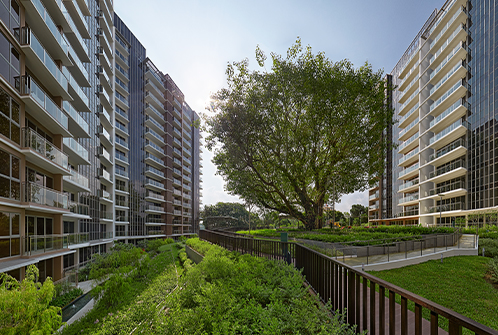 The residential blocks, walkways, and communal spaces at Bartley Residences were built around the Bodhi tree, which serves as a central landmark point for the estate’s community.
Four residential blocks were thoughtfully positioned around this protected zone, allowing the Bodhi tree to remain undisturbed while becoming the visual and emotional centrepiece. Pathways curve gently around its expansive canopy, a children’s playground and community pavilion sit nearby, and landscaped spaces encourage residents to pause beneath its shade. In the evenings, subtle lighting highlights its towering presence, transforming it into a serene landmark within the estate.
Irwell Hill Residences
When CDL developed Irwell Hill Residences, the site offered all the hallmarks of a coveted address: a prime River Valley location, unmatched connectivity with Great World MRT station being a short stroll away, and ample space to realise a distinctive architectural vision. Yet beyond its urban advantages, the land held something organic.
During the initial site assessment, the project team encountered four majestic Samanea saman trees, commonly known as rain trees, each more than 30 years old. Their expansive canopies stretched in every direction, offering shade and sanctuary.
Recognising that these towering giants could enrich the environment in ways that concrete cannot, the approach sought to integrate them meaningfully into the architectural design. The canopies would soften the architecture, inject vitality into communal spaces, and create a sense of calm rarely found in dense urban settings. Rather than obstacles, the trees became central to the development’s character.
Irwell Hill Residences’ architects carefully designed the towers and facilities around the rain trees, placing them at the heart of the development and embodying CDL's ethos of "Conserving as We Construct."
Architects designed the towers and facilities seamlessly around them, with careful attention to root zones and long-term tree health. Residents will enjoy the luxury of swimming, relaxing, and socialising beneath their generous shade, while children and pets play on the lush, open grounds. These preserved trees lend depth, permanence, and authenticity, anchoring contemporary living in a sense of enduring nature.
The Future of Thoughtful Development
As Singapore continues to grow, developers face the challenge of balancing efficiency with heritage and environmental stewardship. Integrating mature trees or historic structures into new projects demands creativity and sensitivity, ensuring they are not merely decorative but active participants in the community.
Projects like Bartley Residences and Irwell Hill Residences demonstrate that history and modernity can coexist. When carefully preserved and integrated, trees and historic elements enrich the skyline and elevate the living experience of residents, complementing preservation and progression. In land-scarce Singapore, we may see a future of urban development weaving history, nature, and modern living into a seamless, enduring tapestry.