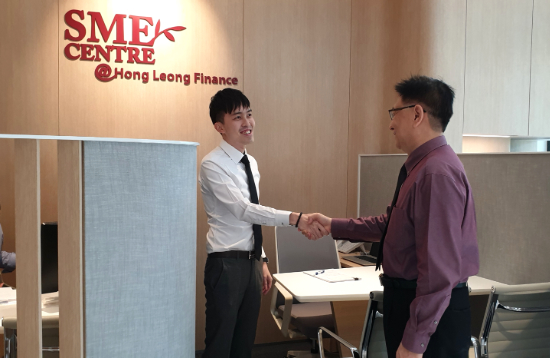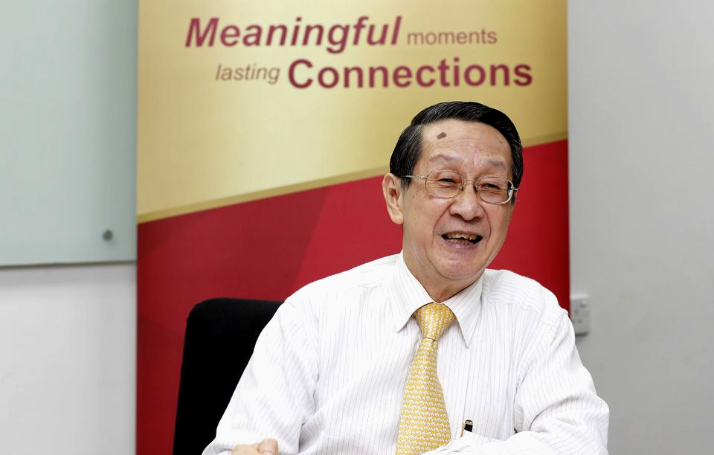
Hong Leong Finance President Mr Ang Tang Chor recently sat down with Singapore’s business daily, The Business Times to talk about the impact the trade wars may have on Singapore, and how the company is weathering this storm. This is what Mr Ang said.
Local companies will likely face a profit slowdown this year on the back of the US-China trade war, which shows no signs of easing, as well as property cooling measures that kicked in last July, said Ang Tang Chor, president of Hong Leong Finance.
“SMEs (small and medium-sized enterprises) in Singapore will be hit harder than others, especially those at the lower end of the value chain,” he told The Business Times in an interview.
This could spell bad news for Hong Leong Finance, for which SMEs make up about 70 per cent of its loan books. It is also heavily collateralised against real estate, which accounts for 80 per cent of its portfolio.
So far, there seems to be no visible impact on its bottomline. In its latest Q1 results, it posted a 1.5 per cent increase in net profit to S$26.2 million, while its revenue, measured by its total interest income and hiring charges, rose 18.4 per cent to S$95.2 million, driven by loan growth and higher average loan yield.
For the full year ended Dec 31, 2018, net profit was up 38.1 per cent to S$118.3 million, on the back of higher net interest income.
Nevertheless, the financial institution is planning to weather the storm by doubling down on its core SME segment and expanding its non-property related loan services, boosted by the relaxation of the Finance Companies Act effective in late 2017 that allowed higher limits for unsecured business loans. It is also focusing on its vehicle loans and other segments which are seeing “healthy growth”, Mr Ang added.
With business sentiment still cautious, he noted that SME clients are increasingly shopping for cheaper interest rates on loans due to the impact of the trade war.
“As they are affected on the business side, they have to control expenses and are now becoming more careful in buying capital equipment. In the past, they would change equipment every five years, now they try to stretch it out more. We are seeing more of this happening in the market,” he noted.
Among the sectors, manufacturing has been the most hard-hit by the trade war, he said, but added that Hong Leong Finance is quite insulated on this front as it does “very little” lending to the sector.
Small property developers and construction players, on the other hand, have seen their businesses affected due to the double whammy of both the trade conflict and property cooling measures, Mr Ang said.
Despite this, the impact on Hong Leong Finance's loan books is expected to be minimal as its property loan portfolio is considered diversified, including residential, commercial, industrial and hotels, among others. Also, loans are made to both companies and individuals, with HDB loans rising in particular, he pointed out.
This diversification, coupled with its risk management framework, has enabled the company to "weather the headwinds and remain resilient for so long”, said Mr Ang.
As for the other sectors in the Singapore economy, he expects domestic industries such as the food and beverage sector to be hit next as people tighten their purse strings in anticipation of an economic slowdown. But some industries could see a lift, he reckoned. “Industries like logistics, transportation, warehousing and storage could benefit,” he said. “As companies move part of their supply chain to this part of the world, SMEs can capitalise on this.”
One segment that Hong Leong Finance is banking on for growth is vehicle loans. In fact, the firm has grown to become one of the top lenders in the market for vehicle loans, to the tune of about S$1.5 billion in 2018, he estimated.
In the past, car buyers were mostly individuals, noted Mr Ang. But now, companies like Grab and other car leasing firms have become big buyers of vehicles. Hong Leong Finance is also in partnership with a number of automobile brands such as Mazda and Porsche, with plans to grow this segment even further.