(L-R): Mr Yannick Barranco, F&B Assistant, Hard Days Night; Mr Joseph Matos, F&B Assistant, Copthorne Gatwick; Ms Emma Johnson, Bibendum Account Manager; Mr Scott Stevenson, Operations Manager, Millennium Glasgow; Mr Christophe Huchon, F&B Assistant, Chelsea Harbour Hotel; Ms Emily Humphreys, Bibendum Wine Educator; Mr Hugo Stevenson, Operations Manager, Millennium Gloucester; Ms Chloe Baker, F&B Assistant, Copthorne Cardiff.
Journey To
The Land Of
Wine And
Cheese
This is an edited version of a story contributed by Ms Chloe Baker, F&B Assistant at Copthorne Cardiff and runner-up of M&C’s Wine Ambassador of the Year 2019. She and five other winners recently visited Emilia-Romagna, a region in northern Italy, as part of their wine educational tour.
“Welcome to Emilia-Romagna!” Dani warmly greeted us as we came through the airport arrival gates. Dani, responsible for bringing wine brand Poderi dal Nespoli to Northern Europe and Northern America, was our gracious host for this trip. A short minibus journey from the airport brought us to a traditional Italian restaurant, perched on the side of a country road surrounded by rows of apple trees, where we had a satisfying lunch before touring cheese factory ‘4 Madonne Caseificio dell’Emilia’.
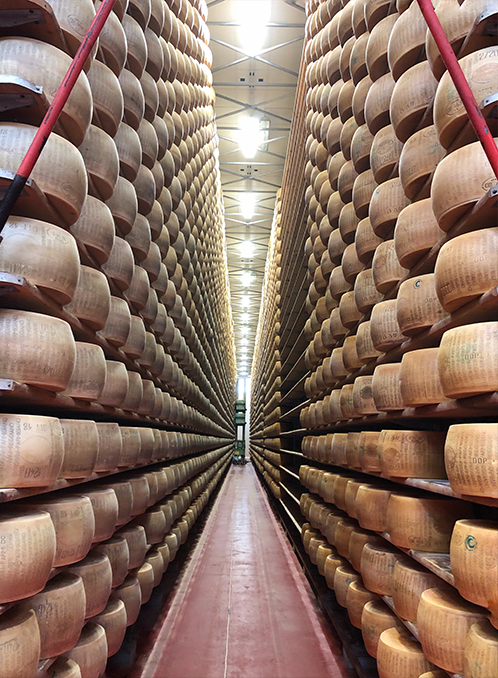 Wheels of Parmigiano Reggiano are aged for at least one year at the warehouses of 4 Madonne Caseificio dell’Emilia, one of the largest producers of parmesan cheese, before being distributed.
Our guide explained the different phases of the process as we followed her through the rooms of the factory, watching through the glass as the cheese makers worked at their craft. As she took us into the warehouse, we were greeted by just shy of thirty thousand cheeses, perfectly aligned in seemingly never-ending rows. Standing below these towers of cheese, the guide explained how it is tested for quality by a Battore (drummer), who decides if it is up to standard by listening to the sound it makes when tapped by a hammer.
From start to finish, the process of making Parmigiano Reggiano is an art form derived from passion, which makes it much more than just food.
Bright and early the next morning, a short bus journey up through the beautiful Tuscan-esque hills got us to Poderi dal Nespoli, a winery that spans four generations of the Ravaioli family. The winery celebrates its ninetieth anniversary this year.
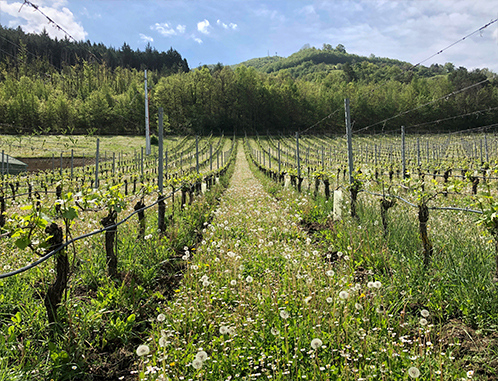 Behind the wine shop and giant cellar, miles of vineyard stretch right to the forest. In the distance is Bidente Valley, the place where Atillo Ravaioli first started making the wine that we now know as Poderi dal Nespoli.
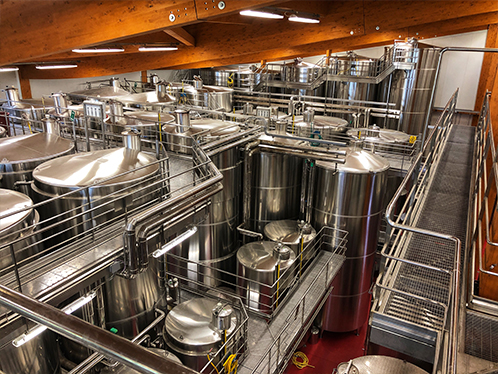
The first stop on our tour was the Bottega del Vino (the wine shop), the front-facing aspect of the winery, where all the hard work that goes on behind the scenes culminates. Next to it is the giant cellar, where a maze of steel containers process grapes into wine. This is where modernity and efficiency of new techniques meet the passion and history of Romagna winemakers.
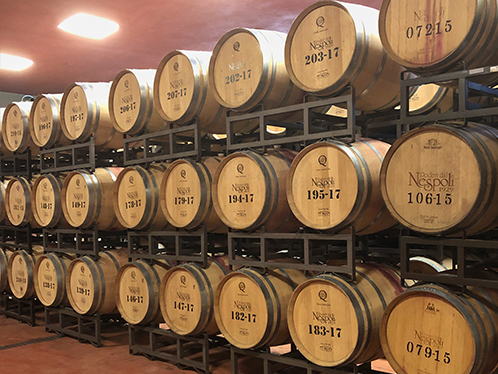
Grapes are processed in modern steel containers before being left to age in French oak and American oak barrels, which give the wines their different flavours.
As part of the tour, we were taught how to make traditional Italian flatbreads. Enjoying the fruits of our labour with a glass of sparkling wine, we were lucky enough to meet Alfeo Martini, president of Mondodelvino, one of Italy’s top wine exporters. It was the combined efforts of Alfeo and the Ralvaoili family that has made Poderi dal Nespoli’s expression of Romagna available internationally.
 (L-R): Mr Alfeo Martini, President of Mondodelvino; Ms Chloe Baker, F&B Assistant, Copthorne Cardiff; Mr Scott Stevenson, Operations Manager, Millennium Glasgow; Mr Christophe Huchon, F&B Assistant, Chelsea Harbour Hotel; Mr Joseph Matos, F&B Assistant, Copthorne Gatwick; Mr Hugo Stevenson, Operations Manager, Millennium Gloucester; Mr Yannick Barranco, F&B Assistant, Hard Days Night; Ms Emily Humphrey, Bibendum Wine Educator; Ms Emma Johnson, Bibendum Account Manager.
We tried a variety of white and red wines, but my personal favourite was their Poderi dal Nespoli 2018, made from the less common ‘Famoso’ (translated ‘famous’) grape. This wine was very light, aromatic, fresh and fruity whilst still managing to have a level of complexity about it.
Having learnt so much about wine leading up to the trip and having the opportunity to visit the vineyard and winery where it’s all made, tasting the wines and learning about them from the people who create them was an incredible experience. The fact it took place in Emilia-Romagna as well, which has such deep-rooted traditions for making prestigious food and wine, made the whole experience that bit more special.
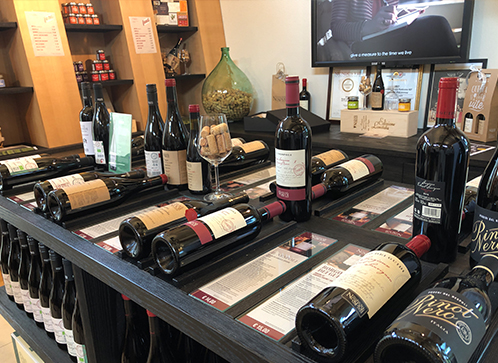 Poderi dal Nespoli’s red wines are made from their signature Sangiovese grape. The versatility of this grape variety gives each wine its own unique character.
Our trip didn’t quite end there, and our last supper was really something to remember. An aperitivo seemed only logical since it was our last opportunity to take in the culture, so we enjoyed the lively but relaxed atmosphere of a local bar before our meal. A pink wheel of Parmigiano Reggiano atop some legs acted as a nice decorative stool, reconfirming the pride the people of Emilia-Romagna have of their quality produce.
We decided on a final night cap before parting ways with Dani. She suggested a bar specialising in a certain kind of alcohol, and after a wonderful few days learning about the beauty of Italian wine, we were all immediately sold: what better way to end a wine trip than with a nice pint of craft ale?