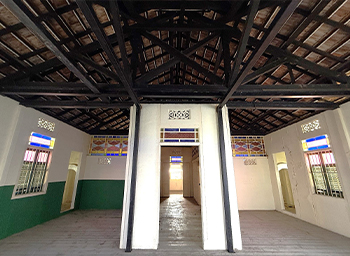
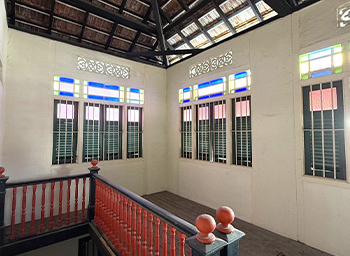
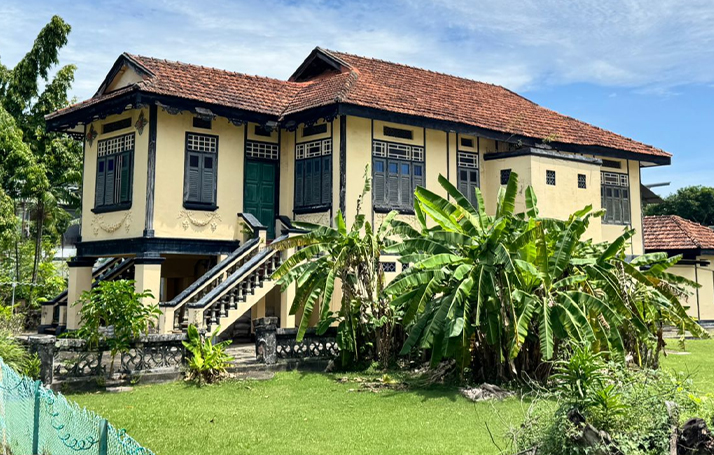
 The century-old Villa Haji Kahar, one of the last surviving landmarks of old Kampong Bedok, has been designated for conservation by the Urban Redevelopment Authority (URA) for its historical and architectural significance.
Conserving
A Piece Of
Singapore’s
Heritage,
Villa Haji Kahar
1920s bungalow built by the “King of Bedok”.
HR Property Development is set to breathe new life into one of Singapore’s hidden heritage gems. As plans progress for a premium landed residential development in Bedok, the more than 100-year-old Villa Haji Kahar will be conserved. HR Property Development is a wholly owned subsidiary of Hong Realty under the Hong Leong Group.
Villa Haji Kahar, a heritage bungalow dating back to the 1920s, has been designated for conservation by the Urban Redevelopment Authority (URA). The move recognises its historical and architectural significance as one of the last surviving landmarks of old Kampong Bedok.
The bungalow sits on a 5,963 sq m (64,185.2 sq ft) freehold site owned by HR Property Development, a wholly owned subsidiary of Hong Realty under Hong Leong Group. The site, which will be redeveloped into a premium private landed housing project, also includes a traditional kampung-style house and several single-storey buildings.
Historical significance
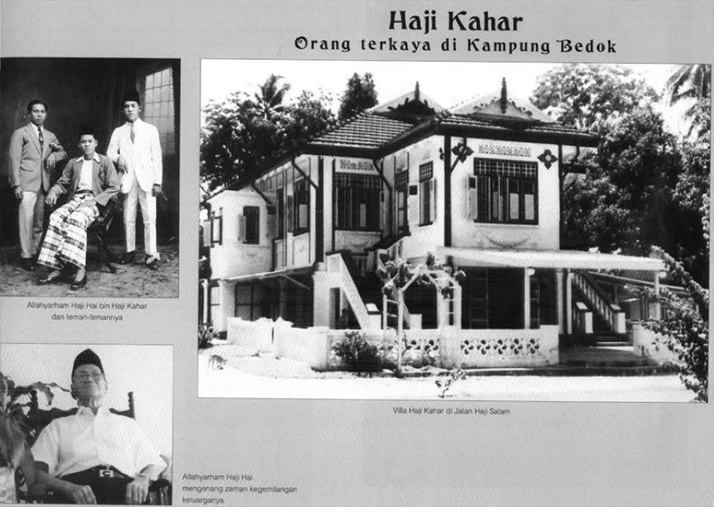 The Malay text in the photo translates to "The Richest Person in Kampong Bedok". Built in the 1920s, Villa Haji Kahar was the grand residence of Haji Kahar Abdul Ghani (1863–1940), a pioneering Malay entrepreneur widely known as the "King of Bedok". (Credit: Singapura Stories Facebook page. Original photo from the book, Kilat Senja by Hadijah Rahmat (2005), showing Villa Haji Kahar in Kampung Bedok on the street, Jalan Haji Salam.)
Villa Haji Kahar was built by Haji Kahar Abdul Ghani (1863–1940), a pioneering Malay entrepreneur who left his hometown of Palembang, Sumatra, Indonesia, for Singapore in 1882 in search of better opportunities. He went on to become one of Bedok's most prominent businessmen.
Beginning with odd jobs, he established a successful barter trading business linking Singapore and Palembang before expanding into property, plantations and retail. He also became the first Malay businessman to secure a distribution licence for His Master's Voice (HMV) gramophone records, reflecting Singapore's growing role as a regional trading hub in the early 20th century.
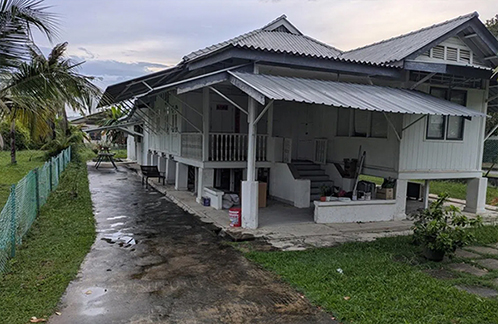 A kampong-styled house beside the villa that currently sits on the site. A kampung-styled house is a traditional Southeast Asian village home, typically found in Malaysia and Indonesia. (Credit: The Straits Times/Ng Keng Gene)
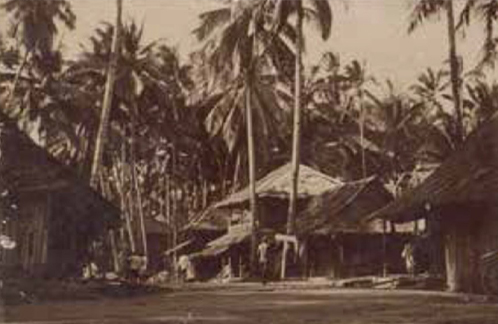 A glimpse of Kampong Bedok in the mid-20th century. Once a thriving coastal settlement and home to a vibrant Malay community, the village was cleared in the 1970s to make way for modern urban development. (Credit: National Museum of Singapore)
His business success enabled him to acquire around 30 acres of land in Bedok in the 1900s from a Chinese nutmeg plantation owner for about $7,000, completed with small houses and fruit orchards, where he built Villa Haji Kahar as a family home large enough to accommodate his extended family of 16 children.
At the height of his success, Haji Kahar was one of the area's largest landowners and became widely known as the "King of Bedok". He had two horse-drawn carriage to ferry him between Bedok and the city, and would later spend $1,190 to replace his carriage with Ford cars.
The URA said the villa “showcases an architectural fusion of traditional and imported styles”.
Despite his wealth, he was remembered for his humility, declining the renaming of Jalan Haji Salam after himself out of respect for a village elder. In later years, he devoted much of his time to religious education, serving as a Quran teacher at the nearby Masjid Al-Taqua.
Beyond its striking blend of traditional Malay and imported architectural influences, Villa Haji Kahar stands as a physical reminder of Singapore's multicultural trading heritage and the contributions of early Malay entrepreneurs to the nation's development.