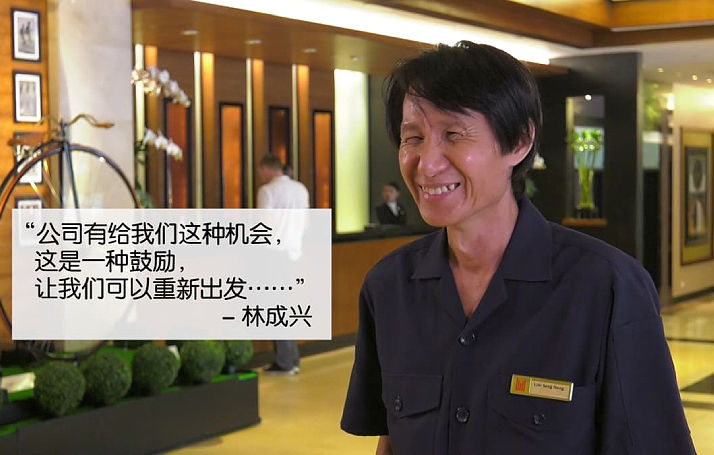
 Mr Lim Seng Heng from Copthorne King’s Hotel has undergone a reskilling programme to expand his skill set and job scope from painting to managing water and electricity facilities. He says he is “encouraged by the opportunity given which will allow him to have a new start”.
From Painter
To Technician
Copthorne King’s Hotel taps onto hospitality lull to upskill and reskill employees.
Copthorne King’s Hotel has been tapping onto the hospitality lull during the COVID-19 pandemic to retrain staff, empowering them with new skills to drive performance and productivity. Employees aged between 40 to 60 years old, who have been doing the same job scope for a period of time, are eligible for the upskilling and reskilling programmes.
The hotel has tapped into a series of programmes, such as Place and Train by Workforce Singapore, the Mentor Assistant Programme by the Employment and Employability Institute (e2i) and Company Training Committee by the Food, Drinks & Allied Workers Union. These initiatives help to improve the work process, leveraging technology to improve productivity, standardise systems and reduce workers’ pain points.
One staff member who has undergone this programme is 60-year-old Mr Lim Seng Heng. A painter for the past four decades, he has been with Copthorne King’s Hotel for nine years, with his former job scope focused on painting work, such as repainting exterior and interior walls and ceilings that had been dirtied or damaged.
Through the Job Redesign Place and Train Programme, he had the opportunity to upgrade his skills from a painter to hotel technician. The scheme covers 50 to 100 hours of training, where he was trained by Assistant Chief Engineer Mr Kumara Shamugan. With the reskilling, his job scope expanded to include water and electricity facilities management. He also hopes he can use his many years of experience to help the team develop daily work systems.
Mr Lim said, “I’m very thankful that the company has given older staff these learning opportunities. I think that skills in the area of water and electricity will be very helpful, and learning English will also help me interact better with tourists.”
