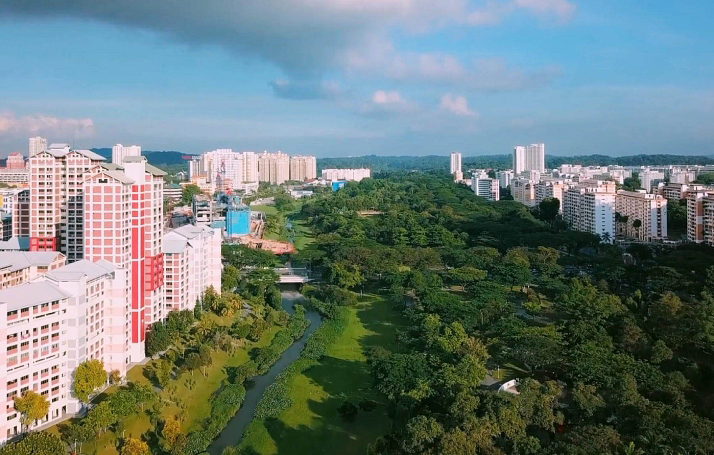
 One of the pillars of Singapore’s sustainable development movement towards a better and greener future is ‘City in Nature’, to create a green, liveable and sustainable home for Singaporeans. (Photo credit: SG Green Plan)
Singapore
Gears Up
Towards
Green
Singapore has recently unveiled its public sector’s new sustainability movement, GreenGov.SG, a key enabler of the national sustainability agenda mapped out in the Singapore Green Plan 2030. While the movement is aimed at greening the public sector, corporates and the community have been encouraged to work together to achieve the sustainability targets. Here’s a look at more of Singapore’s greening initiatives and some ways our companies are supporting the green agenda.
The Singapore Green Plan is part of the country’s commitment to the United Nation’s 2030 Agenda for Sustainable Development, which comprises Sustainable Development Goals (SDGs). Since its adoption, it has spurred the people, public and private sectors to work together to achieve the SDGs and to pursue a green and inclusive recovery from COVID-19. Singapore’s targets include enhancing food security, ensuring sustainable economic growth, and greening infrastructure and industries.
Transport
Singapore has set new targets for the transport sector, with the aim of phasing out all internal combustion engine vehicles by 2040, and having all vehicles run on cleaner energy. To support this, Singapore has targeted to increase the number of charging points nationwide, and to incentivise consumers to opt for green vehicles.
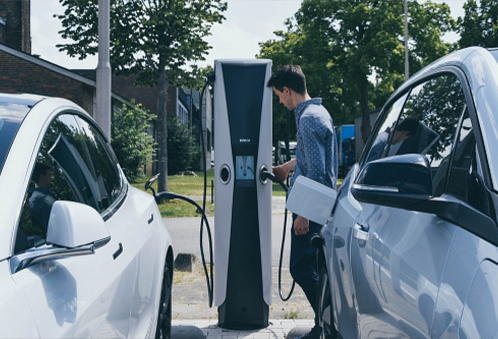 HLF rolled out a Vehicle-Green Loan and Charger-Green Loan earlier this year, to help push consumers towards eco-friendly vehicles. (Photo credit: The Motley Fool)
Hong Leong Finance (HLF) has also ramped up its efforts to push Singapore towards being a green city, and launched the nation’s first green vehicle financing initiative for vehicle rental companies.
The loan comprises two parts – the Vehicle-Green Loan and the Charger-Green Loan. With competitive rates, the former will help steer the sector towards green vehicle usage, and is available for fully electric vehicles or hybrid vehicles. The latter will allow the rental firms to take up charging station financing as a compatible option, to boost the network of charging points around the island.
HLF is also offering attractive financing packages to consumers purchasing eco-friendly cars, teaming up with major car distributors such as MG as the preferred financing partner.
Buildings
In the building sector, Singapore has rolled out initiatives to transit towards a sustainable, low-carbon Built Environment, with key targets set for 2030 in its Singapore Green Building Masterplan. This includes greening of 80% of Singapore’s buildings (by gross floor area), having 80% of new developments to be Super Low Energy (SLE) buildings, and having 80% improvement in energy efficiency for best-in-class green buildings.
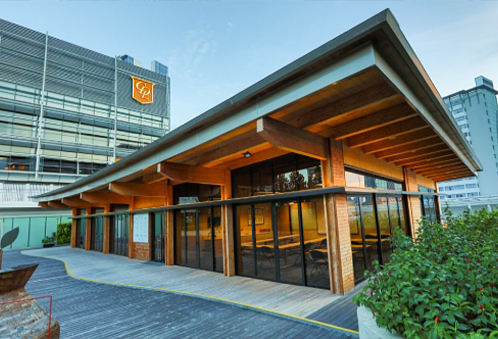 CDL’s Singapore Sustainability Academy, located at the Sky Park (Level 6) of City Square Mall, is a zero-energy facility recognised for its various energy-efficient design and features.
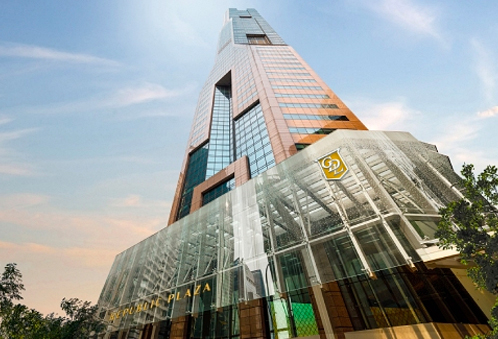 CDL’s flagship building Republic Plaza, is one of Singapore’s tallest skyscrapers. It was also the first development to win a Green Mark Award under the Existing Buildings category, and the 100th development to garner the Green Mark Platinum Award by the Building and Construction Authority.
CDL has also stepped up its sustainability efforts. In its recent Integrated Sustainability Report 2021, CDL said that plans are underway to roll out SLE-certified buildings in Singapore by 2023. It will also progressively reduce its carbon emissions, including retrofitting its managed buildings to further enhance energy efficiency and accelerating the transition to renewable energy. CDL also ensures that its developments have achieved Green Mark GoldPLUS certification. The certification scheme is by the Building and Construction Authority and evaluates a building’s environmental impact and performance.
CDL is also the first real estate developer in Singapore and the first real estate conglomerate in Southeast Asia to sign the Net Zero Carbon Buildings Commitment by the World Green Building Council. By joining the Commitment, CDL is dedicated to achieving net zero operational carbon by 2030 for its new and existing wholly-owned assets and developments under its direct operational and management control.
Energy & Water Consumption
In its ten-year plan, Singapore is ramping up its solar energy deployment, targeting to quadruple its implementation by 2025, including covering rooftops of HDB blocks with solar panels. It also plans to tap green energy sources from the ASEAN region and beyond and increase the efficiency of new generation gas-fired power plants to reduce emissions.
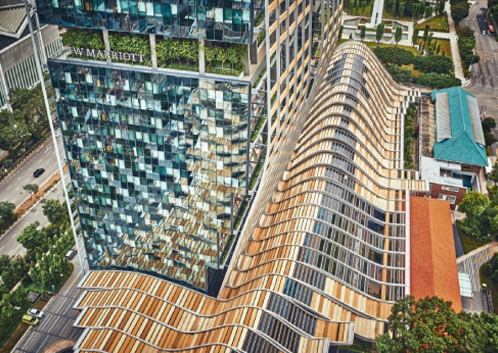 South Beach’s most eye-catching feature is the large microclimatic wave-like canopy that spans across the entire mixed-use development. Other than providing a naturally ventilated shelter, it is also engineered to harvest rainwater and fitted with photovoltaic cells for solar energy.
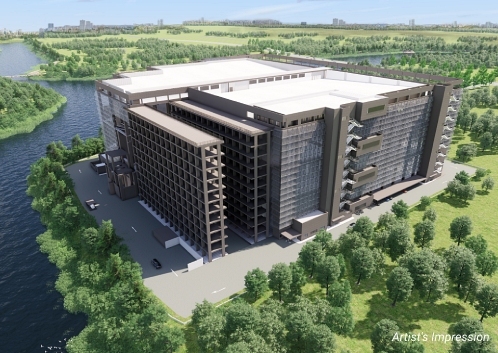 Hong Leong Asia’s upcoming Integrated Construction and Prefabrication Hub has been designed with green features to support the Group’s efforts in lowering energy and water consumption and reducing carbon footprint.
The South Beach mixed-use development is one of downtown Singapore’s iconic skyscrapers. Built with sustainability in mind, it is known for its distinctive architecture that incorporates state-of-the-art green features. Its most striking feature is its large microclimatic wave-like canopy. Spanning across the entire development, the canopy provides pedestrians with a naturally ventilated shelter, and is also engineered to harvest rainwater and fitted with photovoltaic cells for solar energy.
Hong Leong Asia’s upcoming Integrated Construction and Prefabrication Hub in Pulau Punggol Barat, which is currently under construction, is also designed with green features, which help to bring down energy and water consumption and reducing carbon footprint. Some of its features will include waste water treatment and recycling system for its Concrete Batching Plant.
Hong Leong Asia’s Building Materials Group has also developed greener products for customers. One of it is Portland fly-ash concrete (PFAC), a “greener” alternative compared to Ordinary Portland Cement (OPC), which is the most common type of cement used around the world. Due to its material mix, use of PFAC helps to decrease carbon emissions and reduce consumption of natural raw materials, water and energy.
