Millennium Hotel London Knightsbridge’s Director of Sales, Mr Atif Arif, shares with us what Ramadan means to him and how he celebrates it yearly.
Q. Tell us about yourself and what it means to be a Muslim.
My name is Atif Arif and I am the Director of Sales at Millennium Hotel London Knightsbridge, this is my 7th year with the hotel. I was born in Belgium, the land of chocolates, but raised in London, making me a 2nd generation Pakistani-British at heart. I come from a loud Punjabi family where we strongly believe in being together – doing things together and living together.
With over 1.7 billion Muslims in the world, being a Muslim is a variety of things based on perspective. For me it is believing in the oneness of God, a force beyond oneself, being a good human and living by two core principles: compassion and peace.
Q. How is Ramadan celebrated in the UK?
Like all Muslims communities around the world, Muslims in the UK are fasting, worshipping and doing good deeds. The body gets used to not drinking or eating through the day quite quickly. I think the biggest challenge for a lot of working Muslims is getting enough sleep. Having said that, this year the fasts have been much shorter. I remember opening my fast at almost 10.00pm a few years ago; let’s say that wasn’t a walk in the park.
Q. What is Ramadan and how do Muslims usually break fast?
Ramadan is the most anticipated month in the lunar calendar. It is a month dedicated to being your best self at all levels of mind, body and soul. During Ramadan, Muslims around the world fast from sunrise to sunset (yes, we can’t drink water during this time) for 30 days whilst ensuring worship, acts of kindness and charity are all front of mind. It unifies the Muslim community, giving everyone a chance to reset and reprioritise what really matters - unity, strength, community, love, peace and kindness.
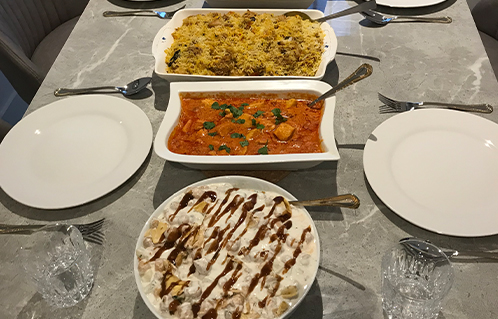
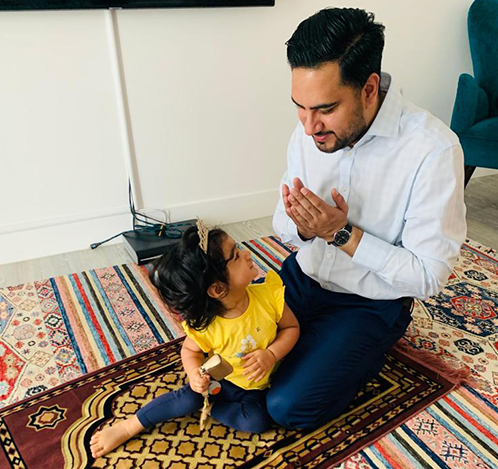
We break our fast with the call to prayer at sunset with dates and water. This is followed by prayer and a yummy meal.
Q. What usually happens on the last day of fasting?
The last day of Ramadan is based on the sighting of the new moon. Once we open our fast, we wait for the sighting to be announced and when we get the green light, the celebrations begin! We get our new outfits and gifts ready for Eid celebration the next day, the celebration that marks the end of Ramadan. Eid decorations go up around the house and the Eid feast preparations begin. Friends and family will celebrate Eid together and no Eid celebration can be complete without a feast fit for a king!